Starting a golf simulator business is one of the more viable paths into the sports entertainment space right now. The startup costs are lower than most people expect, the demand curve is still rising, and the operating model is flexible enough to fit everything from a 2-bay unmanned studio to a 20-bay entertainment venue with a full kitchen. This guide covers the full path from idea to open doors: the business model, the money, the space, the equipment, the software, and the first 90 days. Most guides on this topic are written by companies selling simulator hardware. This one is written from the operations side. We run the booking and management platform behind 200+ indoor golf venues.
The information in this guide draws from our platform data across 200+ venues, operator conversations, and publicly available industry sources including the National Golf Foundation. If anything is inaccurate, contact us and we will update it promptly.
Is there actually demand?
Yes. But the context matters more than the headline. The National Golf Foundation estimates over 19 million Americans now play golf off-course. That number has grown every year for the past five. Indoor golf is no longer a novelty. It is a category, and in most markets, demand still outpaces supply. Our state of indoor golf report covers the market picture in depth. The facilities that struggle aren't struggling because the market is saturated. They are struggling because of how they operate.
Across our platform, the average booking generates $120 in revenue. March is the busiest month, not January like most people assume. Friday, Saturday, and Sunday carry the week, with 1 PM and 7 PM as the peak booking times. The busiest venues aren't always the biggest. A well-run 4-bay facility consistently outperforms a poorly-run 10-bay one.
Pick your golf simulator business model first
This is the decision that shapes everything else: your buildout, your staffing, your pricing, and your tech stack.
The entertainment venue. Bays, food, drinks, big screens, group bookings. The customer isn't necessarily a golfer. They are someone looking for a night out. The revenue mix is split between simulator time, F&B, and events. These venues are typically staffed, need liquor licenses, and have higher buildout costs. But the revenue ceiling is also the highest. If this is your model, read our breakdown of entertainment and hospitality venues.
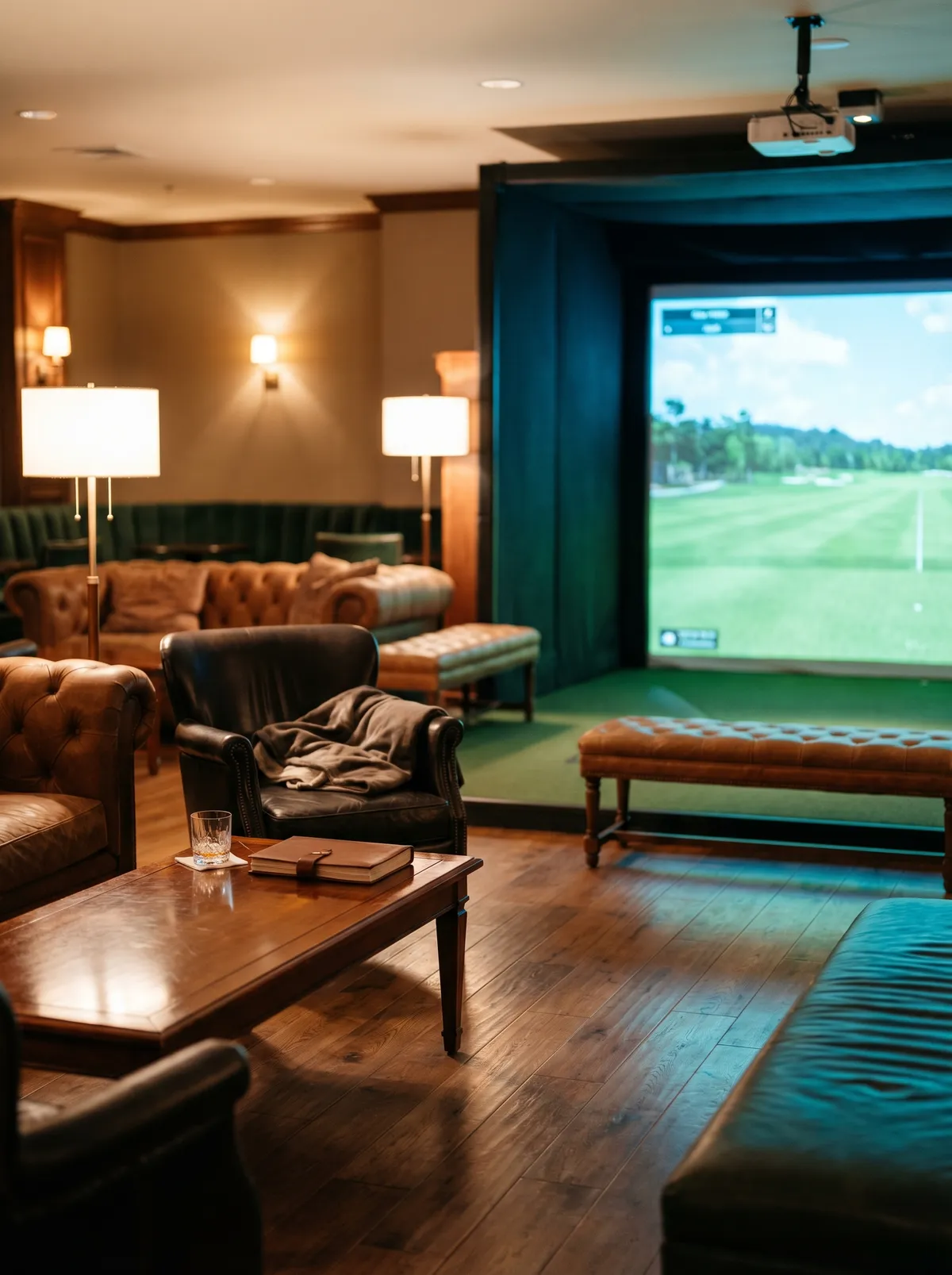
The performance center. Serious golfers, coaching, practice-focused. The bays might have premium launch monitors, the staff might include a teaching pro, and the pricing reflects the quality of the experience. Membership-heavy. These venues live on retention and word of mouth.
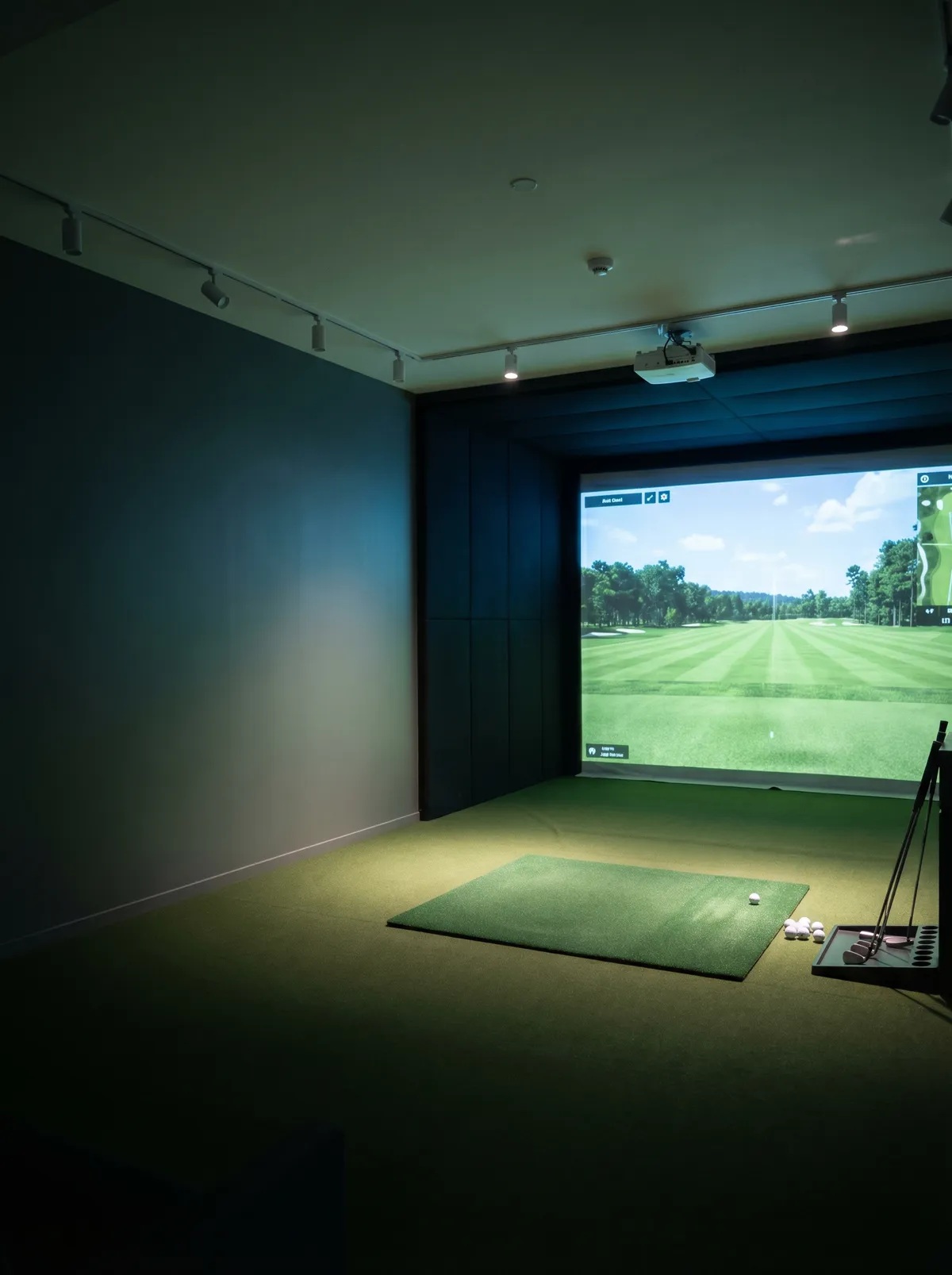
The unmanned studio. No staff on site. Customers book online, get a PIN code, walk in, play, leave. This is the model with the lowest operating cost and the simplest staffing structure. The entire operation runs on the booking and access control system. If that system is unreliable, the model breaks.
The hybrid. Staffed during peak hours, self-serve the rest. This is the most common model we see across our platform. The software needs to switch modes automatically based on the schedule. There is no wrong model. There is only the wrong model for your market, your capital, and your appetite for complexity.
Golf simulator business costs: what it actually takes
The range is wide because the models are different. A 2-bay unmanned studio in a suburban strip mall is a fundamentally different investment than a 12-bay entertainment venue with a commercial kitchen. But here are the real numbers.
Commercial golf simulator cost by tier. This is the biggest single line item. Commercial-grade simulators range from $15,000 to $70,000 per bay depending on the launch monitor, screen, enclosure, flooring, and computer setup. Budget setups using entry-level launch monitors can come in under $15,000 per bay. Premium setups with Trackman, Foresight, or high-end Uneekor units push past $50,000. For most commercial operators, the sweet spot is $20,000 to $35,000 per bay including installation.
Space and buildout. Lease costs vary by market. Bay dimensions typically need 15 to 18 feet deep, 10 to 12 feet wide, and 9 to 10 feet of ceiling height. Buildout costs range from $30,000 to $100,000+ depending on the condition of the space and the finish level.
Software and operations. Booking and management software runs from $50 to $250/month depending on the platform and bay count. Golf O'Clock starts at $150/month for up to 4 bays, then $25/bay/month. Access control hardware adds $200 to $500 per door as a one-time cost. Payment processing (Stripe, Square, or Lightspeed) takes a standard percentage per transaction.
Total startup range
| Model | Bays | Estimated Total | Monthly Operating Cost |
|---|---|---|---|
| Unmanned studio | 2-3 | $60,000-$120,000 | $3,000-$6,000 |
| Small staffed venue | 4-6 | $120,000-$250,000 | $8,000-$15,000 |
| Entertainment venue with F&B | 8-12 | $300,000-$700,000+ | $20,000-$45,000 |
These are ranges we see across venues on our platform, not projections. Your market, your lease, and your finish level will determine where you land.
Location and space
Strip malls, light industrial units, retail spaces, and standalone buildings all work. The non-negotiable is ceiling height: 10 feet minimum, 10.5+ preferred. A lot of operators lose time looking at beautiful retail spaces with 8-foot ceilings that can't work. Visibility matters less than you think. Most bookings come online, not from walk-in traffic. Rent per square foot matters more than storefront quality. Some of the best-performing venues on our platform are in light industrial parks with low rent and high ceilings. Each bay needs roughly 150 to 200 square feet. Add 30-40% for common areas, a front desk or check-in area, hallways, and storage.
Equipment decisions for your indoor golf simulator business
Launch monitors. Entry-level ($2,000-$8,000): FlightScope Mevo+, SkyTrak+, Garmin Approach R10. Fine for casual entertainment venues. Mid-range ($8,000-$20,000): Uneekor EYE XO, Uneekor QED, Foresight GC3. The sweet spot for most commercial operators. Premium ($20,000-$40,000): Trackman iO, Foresight GCQuad. Maximum accuracy, maximum cost. The launch monitor isn't the competitive advantage. We see this across 200+ venues.
Screens, enclosures, and mats. Budget $3,000 to $8,000 per bay for the enclosure, hitting mat, and projector or display. Commercial-grade impact screens from Carl's Place or similar vendors are the standard.
Simulation software. E6 Connect, GSPro, TrackMan Range, Foresight FSX. The choice often depends on which launch monitor you pick. Budget $100-$500/month per bay for software licensing.
Software and systems
Booking and management. You need a platform that handles online booking, payments, memberships, and reporting without manual intervention. If your venue is unmanned or hybrid, the booking system also needs to handle access control. We wrote a full comparison of the best golf simulator booking software, including the evaluation criteria to run through before you compare vendors.
Access control. For unmanned and hybrid venues, this isn't optional. The hardware options are RemoteLock, Kisi, Avigilon, or proprietary solutions like Golf O'Clock SmartLock. Our full access control guide covers the hardware side.
POS. If you serve food and drinks, you need a POS system that integrates with your booking platform. Square, Lightspeed, and Toast are the most common in the space. We wrote a full breakdown in our POS comparison guide.
Financing your startup
SBA loans. The Small Business Administration backs loans for qualified businesses. Typical terms: 10-25 year repayment, 6-8% interest. Requires a business plan, personal guarantee, and sometimes collateral.
Equipment financing. Many launch monitor and simulator vendors offer financing or leasing directly. Leasing can reduce upfront capital by 40-50% compared to purchasing outright.
Insurance and legal. General liability insurance is non-negotiable. Expect $2,000 to $5,000 per year depending on venue size and coverage. Most operators form an LLC for liability protection. Music licensing (ASCAP, BMI, SESAC) runs $500 to $1,500 per year if you play music.
Your first 90 days
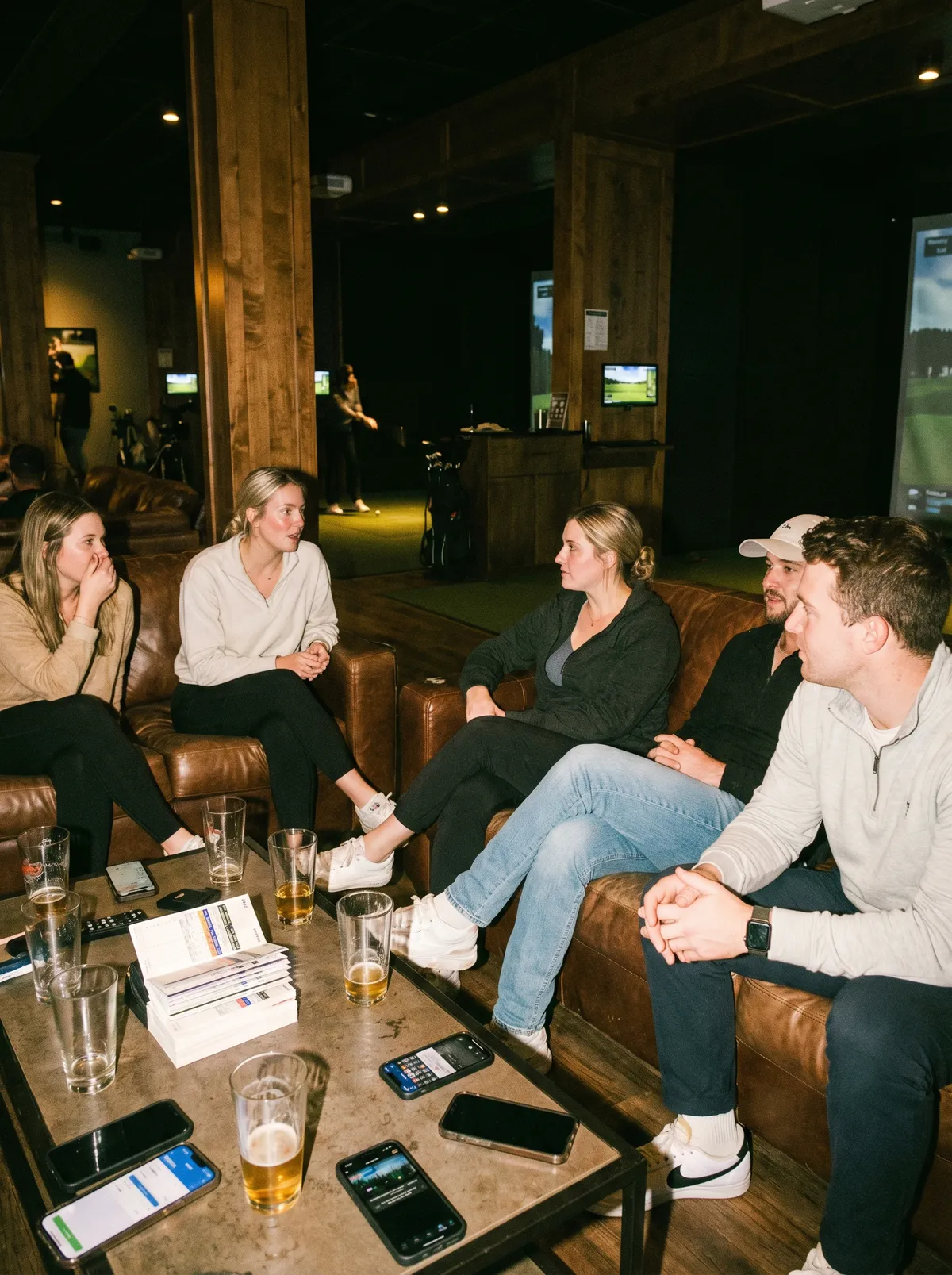
Week 1: Friends and family. Your first week will feel great. You will fill bays with people you know. This isn't real demand. Do not mistake it for a trend.
Weeks 2-4: Curiosity bookings. People in the area have heard about you. This is the window where you collect every email address, ask for every Google review, and rebook before the customer leaves. Everything you do in this stretch compounds.
Weeks 5-8: The dip. The early buzz fades. The regular rhythm has not been built yet. The ones who get through it are obsessing over two things: their email list and their rebooking rate.
Months 3-6: Building the machine. By now you know your real numbers. This is when you start optimizing: adjust pricing rules for peak vs off-peak, launch a Thursday night league, build a membership tier. One pattern we see consistently: an operator launches a league, almost as an experiment. Within two seasons, that league is responsible for 15 to 20% of their weekly revenue.
This is also the point where it's worth checking how your numbers compare. Our facility benchmark quiz takes about a minute and shows where your utilization sits against venues with a similar bay count and hours model.
The seasonal reality
Indoor golf is seasonal. November through May is when occupancy peaks. March is the busiest month on our platform, followed by January and April. The off-season (June through September) is a different business. The facilities that treat summer as "winter but worse" discount their way through it. The ones that treat it as a separate operating mode come out ahead. Read our full off-season management guide for the full approach.
Common golf simulator business mistakes
Over-investing in hardware, under-investing in systems. The launch monitor isn't what makes or breaks the business. The booking flow, the access control, the membership automation, and the follow-up sequences are. We have seen 3-bay facilities outperform 10-bay facilities.
No email collection on day one. If you open your doors and don't collect every email from every customer, your grand opening was a party, not the start of a business.
Pricing everything the same. A Friday at 7 PM isn't worth the same as a Tuesday at 2 PM. Peak and off-peak pricing is standard in this industry for a reason.
No cancellation policy. Without a card on file or a deposit at booking, your calendar is a wish list. Almost nobody ghosts, true no-shows run about 1%, but roughly 18% of bookings get cancelled. Take payment up front and that drops to about 15% from about 20%.
Written by Mathieu Morin, CRO at Golf O'Clock. Based on operating data from 200+ indoor golf venues.
Frequently asked questions
How much does it cost to start a golf simulator business?
Total startup costs range from $60,000 for a 2-bay unmanned studio to $700,000+ for a large entertainment venue with F&B. The biggest line items are simulator hardware ($15,000-$70,000 per bay), buildout ($30,000-$100,000+), and lease deposits. Monthly operating costs range from $3,000 to $45,000 depending on model and size.
Is a golf simulator business profitable?
Yes, if the operation is run well. Across our platform of 200+ venues, the average booking generates $120 in revenue. A 4-bay facility running at 60% utilization with hourly rates between $40-$60 can generate $15,000-$20,000/month in gross revenue. We cover this in detail in our profitability breakdown.
How many bays do I need to start?
Two to four bays is the most common starting point. Enough to generate meaningful revenue, small enough to manage without a large team. You can always expand.
Do I need a liquor license?
Only if you plan to serve alcohol. Many successful simulator venues operate without F&B. If you do add it, the revenue contribution (10-20% of total) can be significant, but so are the licensing costs, insurance, and operational complexity.
What software do I need?
At minimum: booking and reservation software, payment processing, and a Google Business Profile. For unmanned or hybrid venues, add access control. For venues with memberships, add automated billing. If you serve food and drinks, you need a POS system that integrates with your booking platform. Golf O'Clock handles all of this in one platform.
How long until I break even?
Most venues on our platform reach break-even within 6 to 18 months depending on startup costs and market size. The faster you build a repeat customer base and recurring revenue (memberships, leagues), the faster you get there.